

Differentiation for Students with Learning Differences
The contemporary classroom is significantly more diverse than the traditional one-room schoolhouse. We live in an age where mental abilities, disabilities and learning preferences are increasingly documented and analyzed, making it possible to cater to individual needs. The key to running a successful classroom of diverse learners is “differentiation”—a pedagogy in which teaching reflects student needs and caters to all types of learners.
Classroom Groups and Centers. Many classrooms utilize small groups, cooperative pairs and centers based on students’ levels and abilities. This collaborative dynamic leads to discussion and positive interdependence. Literacy centers and math groups with tactile activities leave room for more authentic and personalized assessments. Moreover, group processing and division of tasks can be beneficial for students with all different strengths, and this supports a culture of teamwork in an inclusion classroom.
Visual Aids in the Classroom Using images in anything from a social studies article to a science experiment adds another layer of context and makes grade-level content more accessible to different learning preferences. When reading a story, portray the words on the board and provide students with copies to read at their desks while you read aloud. Or, when starting a new unit, display applicable media and videos to accompany the text and lesson. This is particularly helpful for students with attention and processing disorders.
Lesson Plan Adjustments. Making strategic adjustments in your lesson plans can potentially help a greater number of students. When teaching writing, incorporate multiple graphic organizers and templates. When teaching multiplication, discuss arrays, skip counting, distributive property, standard method and the lattice method instead of just one method. When teaching about animals in the winter, conduct a preview of words that may appear in the text, such as “features,” “warmth,” “temperature,” “hibernation” and “adaptation.” Leave the definitions and images on the board while reading the chapter. These little adjustments provide a necessary flexibility and the chance to work toward independence without the overwhelming expectations of standard education.
For more information, please call Brain Balance Center of Valencia at 661-260-2228 and visit www.brainbalancecenters.com.
ADVERTISE WITH US
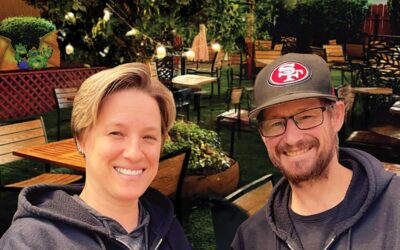
Old Town Newhall Meet the Merchants – Brewery Draconum
Brother (Ben) & Sister (Caroline)24407 Main Street, Old Town Newhall661-568-9160www.brewerydraconum.comThis sibling-team has created a real destination spot for locals featuring original fresh-prepped menu items, house brews, guest beers,...
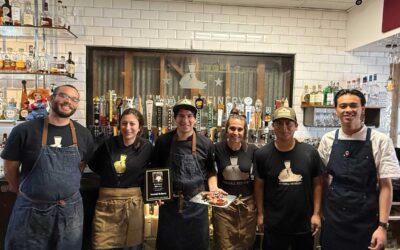
Old Town Newhall Meet the Merchants – Newhall Refinery
(L-R) Tyler (Bartender) , Seda (Server) , Danny (Line cook), Michelina (Bar/Server) , Victor (Line Cook) and Korey (Sous Chef) 24258 Main Street, Old Town Newhall 661-388-4477 | www.newhallrefinery.comChristine and Ralph Gonzalez, husband and wife team, are the...

Old Town Newhall Meet the Merchants – Locale Studios
Dyana & Michael Gutierrez24359 Main Street, Old Town Newhall661-888-1981 | www.localestudiosca.comAt Locale Studios, we believe that every event should be as unique and special as the people celebrating it. Our boutique private event venue is designed to...
ABOUT THE MAGAZINE
Santa Clarita Magazine has set a high standard for excellence in advertising for over 36 years. A family owned and operated business, Santa Clarita Magazine has grown with the Santa Clarita Valley since 1990 and become the #1 place to advertise locally.
FOLLOW US
SANTA CLARITA MAGAZINE
PO Box 801570
Valencia Ca 91380
For Advertising information
Call or Text: 1 (661) 294-4444