

Families First-Keys to Successful Family Functioning: Communication – Part three of three
Think About the Person with Whom You Are Communicating
Not all family members communicate in the same manner or at the same level. This is especially true of young children. When communicating with young children, it is important for adults to listen carefully to what the children are saying without making unwarranted assumptions. It is also important to take into consideration the ages and maturity levels of children. Parents cannot communicate with children in the same way that they communicate with their spouse because the child may not be old enough to understand.
Pay Attention to Non-Verbal Messages – In addition to carefully listening to what is being said, effective communicators also pay close attention to the non-verbal behaviors of other family members. For example, a spouse or child may say something verbally, but their facial expressions or body language may be telling you something completely different. In cases such as these, it is important to find out how the person is really feeling.
Be Positive – While it is often necessary to address problems between family members, or to deal with negative situations, effective communication is primarily positive. Marital and family researchers have discovered that unhappy family relationships are often the result of negative communication patterns (e.g., criticism, contempt, defensiveness). In fact, John Gottman and his colleagues have found that satisfied married couples had five positive interactions to every one negative interaction (Gottman, 1994). Couples who are very dissatisfied with their relationships typically engage in more negative interactions than positive. It is very important for family members to verbally compliment and encourage one another.
Focus on Family Strengths – Communication is a key to successful family functioning. Researchers agree that clear, open, and frequent communication is a basic characteristic of a strong, healthy family. Families that communicate in healthy ways are more capable of problem-solving and tend to be more satisfied with their relationships.
Family Assessment – Successful Healthy families periodically take inventory of their strengths and weaknesses and take steps to improve their home and family environment. Isn’t it time your family took an inventory of how well it is doing?
References
Epstein, N. B. Bishop, D., Ryan, C., Miller, & Keitner, G., (1993). The McMaster Model View of Healthy Family Functioning. In Froma Walsh (Eds.), Normal Family Processes (pp. 138-160). The Guilford Press: New York/London.
Gottman, J.M. (1994). Why marriages succeed or fail. New York: Simon & Schuster.
Graham, E., & Crossan, C. (1996). Too much to do, too little time. Wall Street Journal, March 8, R1-R4.
Markman, H. J. (1981). Prediction of marital distress: A 5-year follow-up. Journal of Consulting and Clinical Psychology, 49, 760-762.
Noller, P., & Fitzpatrick, M. A. (1990). Marital communication in the eighties. Journal of Marriage and the Family, 52, 832-843.
Reviewed by Novella Ruffin, Extension Specialist, Virginia State University.
ADVERTISE WITH US
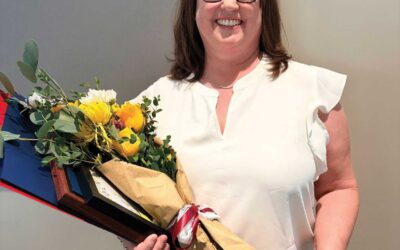
“Women Who Serve” Event Celebrates Local Volunteers; Christy Alben Receives Zonta Service and Impact Award
On Saturday March 21, 2026, the Zonta Club of Santa Clarita Valley honored the spirit of volunteerism by recognizing twenty-three women nominated by local nonprofit organizations at its annual Women Who Serve event, held at the Bella Vida SCV Senior Center.Each...
Staggs Law, PC Fired After Speaking Up? Wrongful Termination, Retaliation, and Employee Rights in California
One of the most searched questions in California employment law is simple: Can my employer fire me for this? Many employers point to California’s at-will employment rule and act as though that ends the analysis. It does not. While California is an at-will...

Circle of Hope’s Wellness Day – Sunday, May 31, 2026
Circle of Hope is once again bringing compassion and care to the Santa Clarita community with its upcoming Wellness Day, a heartfelt collaboration with Monarch Beauty Academy. Taking place on Sunday, May 31, 2026 from 9:00 AM to 2:00 PM, this special event is...
ABOUT THE MAGAZINE
Santa Clarita Magazine has set a high standard for excellence in advertising for over 36 years. A family owned and operated business, Santa Clarita Magazine has grown with the Santa Clarita Valley since 1990 and become the #1 place to advertise locally.
FOLLOW US
SANTA CLARITA MAGAZINE
PO Box 801570
Valencia Ca 91380
For Advertising information
Call or Text: 1 (661) 294-4444