

Going Backward to Go Forward
While calling education “classical” is new, the practice is as old as Plato and Socrates.
What is now called ‘classical education’ was before the late 1800s simply ‘education’. Early in the 20th century, education reformer John Dewey argued that education should be solely utilitarian to equip individuals to be useful to society. This approach to education quickly became popular so much so that progressive education has dominated the landscape, and until lately, classical education was nearly extinguished.
The questions in education went from ‘What kind of citizen do we want’ to ‘What do they need to be able to do, and how can we prepare them for that’. Recently, modern, progressive education has focused on telling students what to think rather than how to think.
As Western education drifted from traditional education, author Dorothy Sayers sounded the alarm in her 1947 essay The Lost Tools of Learning, “The combined folly of a civilization that has forgotten its own roots is forcing [the teachers] to shore up the tottering weight of an educational structure that is built upon sand. They are doing for their pupils the work which the pupils themselves ought to do. For the sole true end of education is simply this: to teach men how to learn for themselves; and whatever instruction fails to do this is effort spent in vain.
What makes classical education distinct is it’s openness to questions, particularly those pertaining to morality. Classical education test its students’ assumptions about truth and morality. Classical education doesn’t stop with questions, however. Once questions have been asked, both teachers and students in the classical model must wrestle with truth, and determine how to apply that truth to their lives.
Modern education presents students with facts and dogma to accept at face value and does not encourage inquiry to pursue truth. In many instances, what to think has been settled by the education establishment, questioning orthodoxy is discouraged, and strict conformity is required to remain acceptable to the education community.
Classical education tests its students’ assumptions about truth and morality. The student of classical education questions and wrestles with the concepts of truth, goodness and beauty, those ideas that have profound implications for their life journeys.
For more information about Classical, Christian education, contact Trinity Classical Academy at (661) 296-2601 or visit www.TrinityClassicalAcademy.com.
Photo Credit, Wally Caddow

ADVERTISE WITH US
Taste of the Town 2026
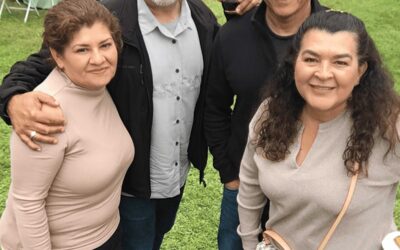
The Child & Family Center’s 37th Annual Taste of the Town brought the community together on Sunday, May 3, at its new location, SoCal Innovation Park in Valencia, for an unforgettable afternoon of gourmet food, wine and entertainment. More than 1,000...

Santa Clarita’s Destination for Relaxation and Renewal – The Ivy Day Spa
For more than two decades, The Ivy Day Spa has been a trusted destination for relaxation, rejuvenation, and self-care in the Santa Clarita Valley. Conveniently located near Valencia Town Center, the spa has become a go-to for locals seeking a peaceful retreat,...
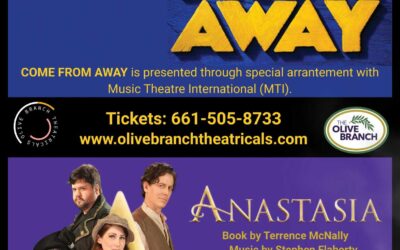
Olive Branch Theatricals Annouces Anastasia The Musical And Auditions For Come From Away
Olive Branch Theatricals is thrilled to announce that rehearsals are officially underway for the beloved Broadway musical Anastasia, opening July 11 and running through July 26 at The Olive Branch Theatre, located behind The Stand restaurant on the Patio Shops...
ABOUT THE MAGAZINE
Santa Clarita Magazine has set a high standard for excellence in advertising for over 36 years. A family owned and operated business, Santa Clarita Magazine has grown with the Santa Clarita Valley since 1990 and become the #1 place to advertise locally.
FOLLOW US
SANTA CLARITA MAGAZINE
PO Box 801570
Valencia Ca 91380
For Advertising information
Call or Text: 1 (661) 294-4444