

Classical Education: Distinct from Other Methods of Education
It seems that more and more families are discovering Classical education. If you were to ask most people just a few short years ago about this method, very few would have been even familiar with the term.
The Classical education method makes use of the first three of the seven liberal arts – grammar, logic and rhetoric, or what is commonly referred to as the Trivium. In times past it was a given that the learning of every discipline or subject involved first getting the basic facts, or grammar. For instance, the who, what, where and when of history would be the ‘grammar’ of history. In most instances, this is where modern education stops. They do not go beyond the surface into the logic of subjects, namely to ask How and Why.
It is in this logic phase that Classical education begins to dig deep and help a child to think and make connections and relations to all the grammar they have stored up. Just how was the Civil War related to the American Revolution? Or how are the great philosophers of antiquity like Socrates and Aristotle related to the philosophers of the Enlightenment such as Locke, Rousseau or Kant? How have early scientists influenced our current thoughts on aeronautics, genealogy or physics? In the logic phase students begin to make valuable connections as to why people, nations and ideas are formed over the vast expanse of history. The rhetoric stage builds on the factual mastery of the grammar stage and logical connections and teaches the student to be articulate and persuasive when discussing a topic.
The beauty of Classical education is that it is a perfect complement with how a child develops, making it an ideal tool for teaching children. Grammar age children (K-6th grade) are naturally inquisitive and have a natural hunger for learning. During the junior high years (7th to 8th grade) they become more argumentative. That is the natural, albeit a dangerous, time to teach them to argue will through the mastery of logic. As they mature into the high school years (9th to 12th grade), they are very image conscious and are ripe for training in rhetoric which will teach them how to communicate confidently, accurately and persuasively.
Classical education has been proven over the centuries, and in this modern renaissance of the method, to be a superior way to educate. It produces well-educated, articulate students who enjoy learning.
Trinity Classical Academy is now enrolling grades Transitional Kindergarten through 12th grade for the 2014-15 school year. For more information, contact Trinity Classical Academy at 661-296-2601 or visit www.TrinityClassicalAcademy.com.
ADVERTISE WITH US
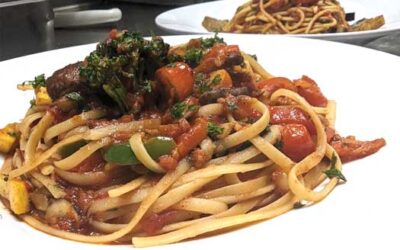
A Taste of Spring at Bella Cucina
Spring is the perfect season to indulge in fresh flavors, and Bella Cucina delivers an unforgettable Italian dining experience that feels like a breath of fresh air. As the days grow longer and the weather warms, there’s nothing quite like enjoying a delicious...
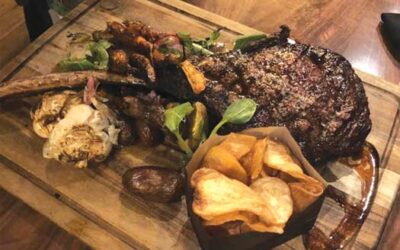
A Taste of Spring at Old Town Junction
Spring in Santa Clarita calls for bold flavors and unforgettable dining experiences, and Old Town Junction delivers on every level. Known for its innovative approach to modern American cuisine, this local favorite brings a fresh perspective to seasonal dining....

A Taste of Spring at Le Chene French Cuisine
There’s something inherently romantic about spring, and Le Chene French Cuisine captures that feeling perfectly. Nestled in the countryside, this charming destination offers a true escape, where classic French flavors meet the beauty of the season. As flowers...
ABOUT THE MAGAZINE
Santa Clarita Magazine has set a high standard for excellence in advertising for over 36 years. A family owned and operated business, Santa Clarita Magazine has grown with the Santa Clarita Valley since 1990 and become the #1 place to advertise locally.
FOLLOW US
SANTA CLARITA MAGAZINE
PO Box 801570
Valencia Ca 91380
For Advertising information
Call or Text: 1 (661) 294-4444