

Demystifying Medicare
Between 2000 and 2015, global average life expectancy increased by five years, the fastest increase since the 1960s.Today, a 60-year-old man has a 63 percent chance of reaching age 85, while a 60-year-old woman has a 71 percent likelihood. If you’re a married couple and each of you are 60 years old, there is an 89 percent probability that one of you will live until age 85.2
With this increase in longevity, your retirement may be a lot longer than those of the generations that came before you. And, as you get older, your health care expenses are likely to increase. Proactive planning for unforeseen health care expense can help protect the retirement you’ve worked so hard to achieve. Understanding how Medicare works is an important first step.
The Basics of Medicare
Once you turn age 65, you qualify for Medicare. Medicare is health insurance funded by the U.S. government. It’s available to you and your spouse if either one of you has worked and paid Medicare taxes for at least 10 years.
Keep in mind that Medicare is different from Medicaid, another type of U.S. government insurance. Medicaid is designed for people with low income and assets. It is funded by state and federal governments, and different states have different eligibility requirements.
Medicare consists of four parts:
Part A. This covers hospitals, including a semi-private room, meals and other general services. It does not cover a private room, private nurse or other extras. Medicare Part A also covers the cost of a skilled nursing facility, but only after a hospital stay of at least three days. It also covers home health care prescribed by your doctor, including part-time nursing, medical equipment and services such as physical and occupational therapy. Finally, Medicare Part A covers hospice care and any blood you might receive while you’re in a hospital or skilled nursing facility. Medicare Part A is free, but only pays benefits during a benefit period that begins when you enter the hospital and ends when you have gone 60 consecutive days without inpatient hospital care or skilled care at a skilled nursing facility.
Part B. Like Medicare Part A, you are automatically enrolled in Medicare Part B if you are receiving Social Security benefits, are at least 65 years of age, or are disabled and have been receiving Social Security benefits for 24 months. However, unlike Medicare Part A, Medicare Part B requires a monthly premium which is based on your taxable income. Medicare Part B can help to offset the cost of doctors’ fees, emergency room visits and other outpatient services. Keep in mind that you do not have to receive Medicare Part B if you do not want it. You always have the option of purchasing private health insurance or, if you are still working, opting for your employer’s health coverage.
Part C. More commonly known as Medicare Advantage Plans, Medicare Part C combines Part A and Part B with other services that may include vision, hearing, dental and some prescription drug coverage. Unlike Medicare Part A and Part B, Medicare Part C is offered by private insurance companies.
Part D. Introduced in 2006, Medicare Part D is the newest of the Medicare programs. Like Medicare Part C, Medicare Part D is issued by private companies. Medicare Part D plans vary in the medications they cover, the co-pay or co-insurance arrangement they make available, and the monthly premiums they require. Like Medicare Part B, Medicare Part D imposes an additional monthly charge if your taxable income exceeds a certain amount.
With so many moving parts, Medicare can be overwhelming. Your health care needs will vary depending on a variety of factors, including your medical conditions, the medications you are taking and even your preferences for medical care. A Financial Advisor who has experience with the nuances of Medicare can help you understand your options and select the solutions that are right for you.
Morgan Stanley Smith Barney LLC (“Morgan Stanley”), its affiliates and Morgan Stanley Financial Advisors and Private Wealth Advisors do not provide tax or legal advice. Clients should consult their tax advisor for matters involving taxation and tax planning and their attorney for matters involving trust and estate planning and other legal matters.
Brian Jacobs may only transact business, follow-up with individualized responses, or render personalized investment advice for compensation, in states where he is registered or excluded or exempted from registration
© 2019 Morgan Stanley Smith Barney LLC. Member SIPC.
ADVERTISE WITH US

12th Annual Beautiful Old Town Newhall Section – History, Culture and Community
Old Town Newhall is the heart of Santa Clarita’s arts, culture and entertainment scene—a place where history meets creativity and every visit offers something new to experience.Whether you are planning a date night, meeting friends or spending time with family, Old...
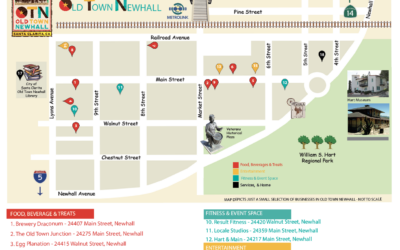
Old Town Newhall Map of Businesses
Here is a Map of the businesses that are in our magazine for this amazing section. ABOUT THE MAGAZINESanta Clarita Magazine has set a high standard for excellence in advertising for over 36 years. A family owned and operated business,...

Old Town Newhall Meet the Merchants – The Break Room
Josh & Rick 22620 Lyons Avenue, Old Town Newhall661-425-9669www.breakroomscv.comThe Break Room SCV is owned by Rick and Josh. Rick brings over a decade of experience in the billiards industry, having previously owned a pool hall and currently operating a...
ABOUT THE MAGAZINE
Santa Clarita Magazine has set a high standard for excellence in advertising for over 36 years. A family owned and operated business, Santa Clarita Magazine has grown with the Santa Clarita Valley since 1990 and become the #1 place to advertise locally.
FOLLOW US
SANTA CLARITA MAGAZINE
PO Box 801570
Valencia Ca 91380
For Advertising information
Call or Text: 1 (661) 294-4444